
AACA Central Divisional Tour
October 18-22, 2025
The Runaway Scrape
Driving through Texas History, One Mile at a Time.

This fall, members of the Antique Automobile Club of America set out on an unforgettable journey through early Texas history — the Runaway Scrape Tour, a 380-mile, four-day rolling adventure from San Antonio to San Jacinto.
The tour drove through four different topographical regions of Texas: The South Plains, Prairies and Lakes, the Pineywoods, and ended at the Gulf Coast, the same plains and forests Native Americans once lived, farmed, and hunted.
Participants from across the country — Texas, Pennsylvania, Arizona, Virginia, North Carolina, and Alabama — joined in, forming a caravan of classic cars tracing the path of Texians and Tejanos fleeing Santa Anna’s advancing army in 1836. What they discovered along the way was more than history — it was the spirit of Texas itself.
Welcome to San Antonio – Day 0
Many of our members arrived on Friday afternoon to experience the River Walk and other fun touristy venues hugging the riverwalk.
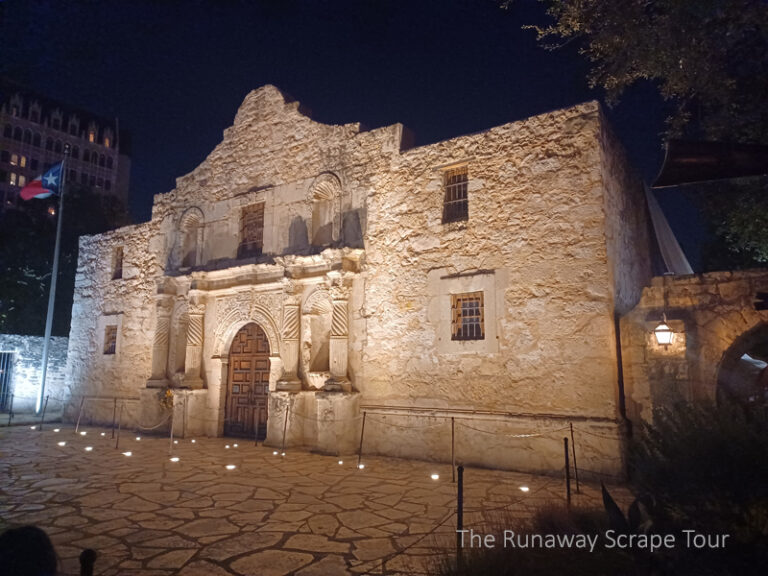
Saturday morning, many members explored historical venues like the Governor’s Palace, Navarro House, and The Alamo Exhibit, all within walking distance from our host hotel, The Menger. It was Tejano (Spanish & Mexicans who settled in Tejas) at the Alamo with re-inactments the entire day! Perfect to set the mood for the tour.
Later that afternoon, staff transitioned into pioneers, greeting tour participants in period clothing using period writing instruments!
This was followed by a Welcome Reception in the Menger Patio Garden, getting to know the out-of-town participants. A Cajun buffet was served inside the Menger’s Colonial Dining Room, where we heard from a Son of the Republic of Texas, John Meehan, an Alamo docent, and whose ancestor escaped from the Goliad Massacre. John welcomed us with stories of the siege and fall of the Alamo — and reminded us that the legend began with loss and courage.
San Antonio to Gonzales: Day 1
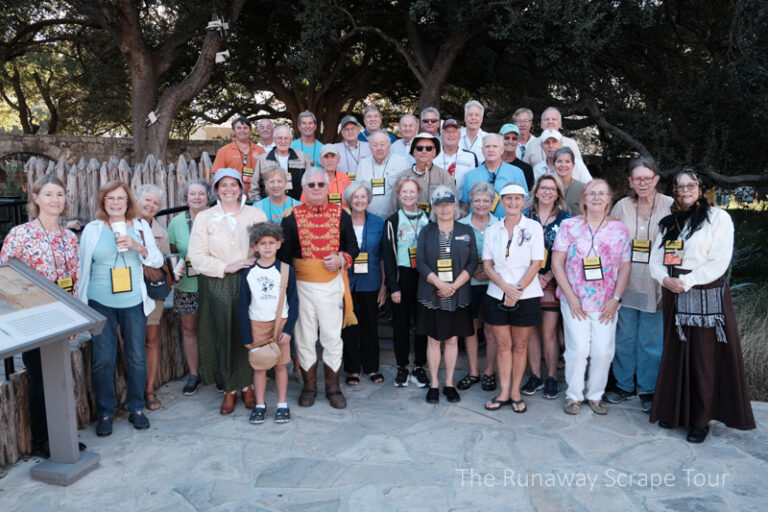
We began our journey in San Antonio, gathering at the Alamo courtyard only to learn that all the men had perished the day before at the Alamo.
Ordered by General Antonio Lopez de Santa Anna, Col. Almonte gave a letter to the one of the few survivors, an anglo woman — Suzanna Dickinson, that stated no quarter will be shown to any Texian rebel. Suzanna, with her toddler daughter, carried the message that sparked fear and panic across Texas. Her firsthand account of the Alamo’s fall became the spark that ignited the “Runaway Scrape,” as families fled east ahead of Santa Anna’s army.
From San Antonio, we drove to Seguin, named in honor of Juan Seguin, a Tejano hero and advocate for Tejas independence, for lunch and then a dessert stop at fellow AACA members, the Menning’s car barn in Cost, Texas.
Just a mile or two down the scenic Independence Trail, we arrived at the First Shots Monument, where 130 men from the Gonzales area rebuffed a dragoon of Mexican soldiers that came for the cannon previously loaned to the settlers for protection against the Native Americans. A skirmish occurred, and there, the first shots of the revolution were fired on October 2, 1835.
Later, we arrived in Gonzales, the capital of DeWitt’s Colony, a smaller colony authorized by the Mexican government. After dinner, Historian Vickie Frenzel shared the story of the Come and Take It cannon, the 130 men who stood at Gonzales, the Immortal 32, and the suffering of the families who endured the long flight east.
That evening, we gathered under the stars at the Gonzales Memorial Museum for Texas Legacy in Lights — a powerful multimedia presentation that brought Texas history to life.
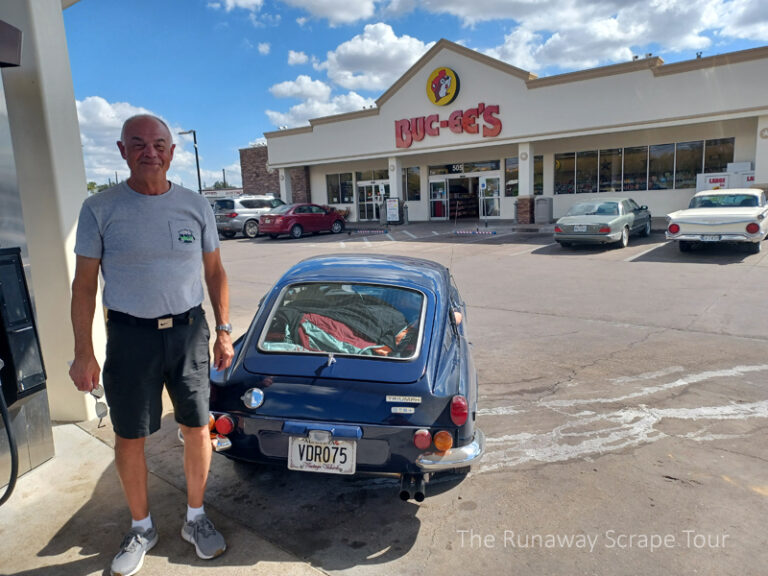
Gonzales to Brenham: Day 2
We started early Monday at the Gonzales Memorial Museum, to see the original “Come and Take It” cannon and pay respects to the Immortal Thirty-Two as all the men from Gonzales that answered William Travis’ plea for help perished at the Alamo.
We again fled eastward to gather at the oak tree where Sam Houston rallied his Texians after an all night march, burning Gonzales as they left leaving no supplies for the Mexican Army.
Proceeding on to Shiner, we stop at the brewery for a BBQ lunch and optional brewery tour before continuing to San Felipe de Austin to visit the museum & settlement remains of the first anglo colony in Tejas. The site manager, Bryan McAuley’s passion for Stephen F. Austin’s colony and the roots of self-governance filled the afternoon.
We hustle northward to overnight in Brenham always keeping an eye on Jeff Podmers.
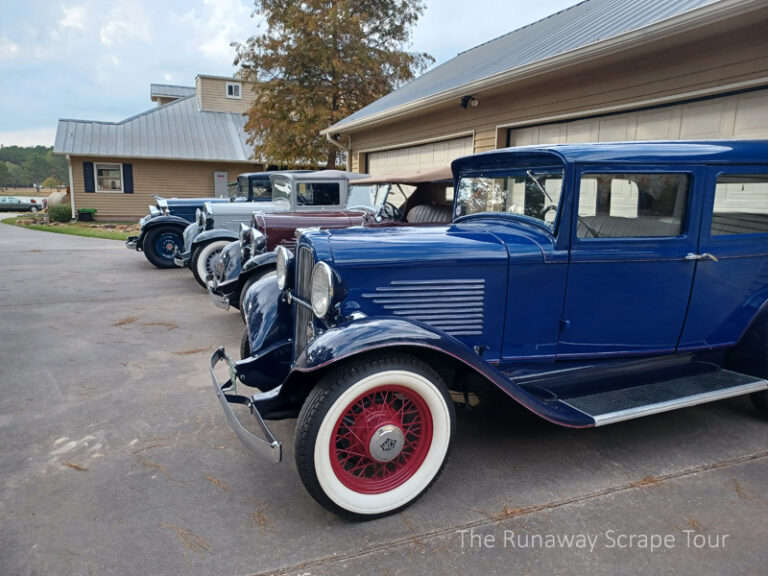
Brenham to New Caney: Day 3
On Tuesday, we visited Blue Bell Creamery (yes, ice cream for breakfast!) and forged our way to Washington-on-the-Brazos, where the Texas Declaration of Independence was signed. John Hicks, a Son of the Republic of Texas, whose family traces back to early Robertson County settlers, shared his family’s Texas story — reminding us how personal this history still is for so many.
The women made bonnets while the men worked on their possible bag to store their flint & steel, paper cartridges, and musket balls. Kip and John gave a brief presentation on firearms of the day: the might Brown Bess with bayonet verses a settler’s long rifle.
After our fajita lunch, we gathered up our belongings and scurried northwest (to avoid Houston) to Cleveland through the pineywoods and rain to AACA members, the Dalton’s. At their ranch, they hosted the group to a fiesta dinner and to a stable of Packards, Willys, and Hudson’s all restored to show quality.
As the sun was setting, faster cars took the highway while the slower vehicles stayed on the access road and drove a few miles to our hotel in New Caney for respite!
New Caney to San Jacinto Monument: Day 4
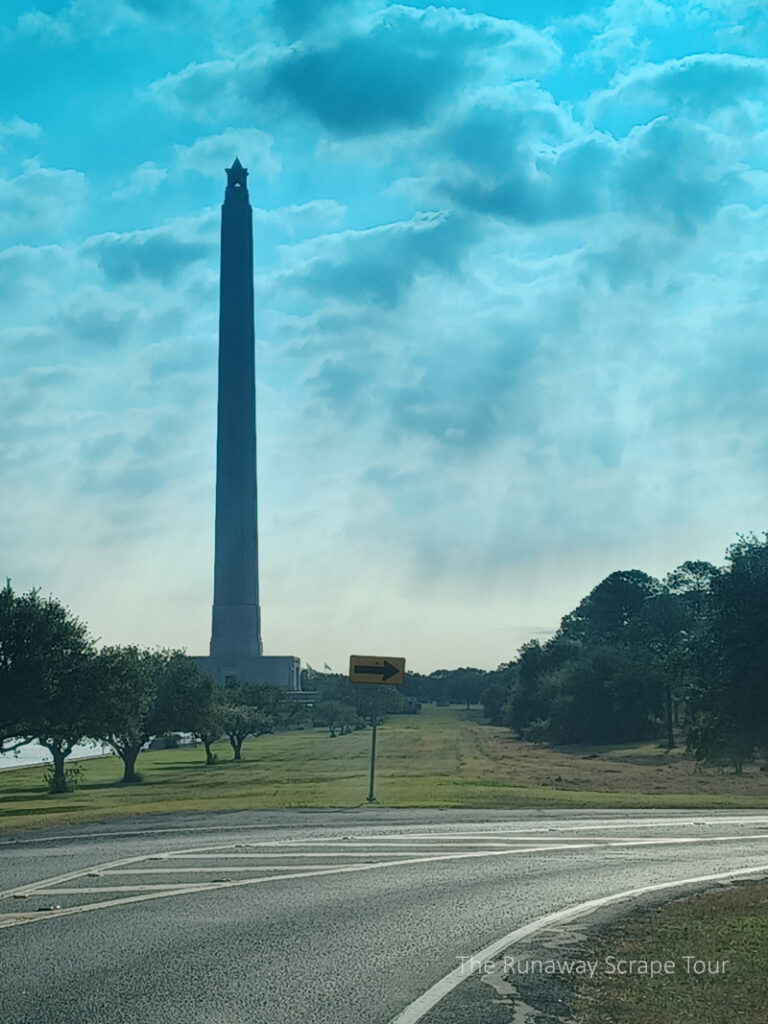
Finally, on Wednesday, we crossed Buffalo Bayou aboard the Lynchburg Ferry (same crossing as the Texian Army took) and arrived at the San Jacinto Battleground, where Sam Houston’s army turned and fought, securing independence for the Republic of Texas in eighteen minutes.
Standing before the towering San Jacinto Monument, we reflected on the long road from fear to freedom — and our own road trip that brought it all to life.
The closing banquet at the Monument Inn offered a final taste of Gulf Coast hospitality — and a few last laughs among new friends. Each participant received a commemorative wooden disc and challenge coin etched with the “Come and Take it Canon” on one side, and the Alamo and tour date on the other.
As we retraced the steps of history, we met the people who lived it: settlers and soldiers, Tejanos and Texians, dreamers like Moses Austin, and his son, Stephn, leaders like Navarro and Seguín, and families who braved hunger, storms, and swollen rivers during the Runaway Scrape.
Was Texas independence won by luck, leadership, or sheer grit? After driving it ourselves, I think we can all agree — it was a little bit of each.
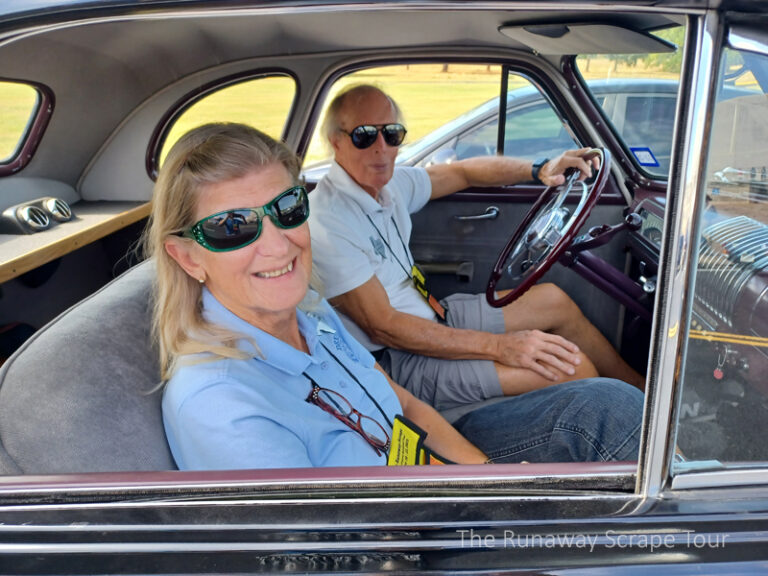
San Jacinto to Galveston: Day 4 Optional
Several of us, including the national contingent, drove southward to Galveston for the National Central Division Meet in which many of our members returned with gleaming hardware!